Integrating Science and Social Studies
How many times have you said that there just isn’t time in your school day to fit everything in? I know I have said it plenty of times. Now…this is not necessarily saying that I want to have a longer school day, because I know how tired the students and I are by the end of the day. I can’t imagine making it longer. However, we can work smarter, not longer. Science and social studies often get pushed to the side in order to fit in reading, writing, and math. By not teaching science and social studies to our students, we are doing them a disservice. So, what do we do? INTEGRATE!

You can truly integrate science and social studies into almost every part of your day.
Here is a break down of how I integrate science and/or social studies into my day.
Morning Meeting
We begin our morning with a Morning Meeting. During this time, we greet each other, discuss our day, and sing a song or read a poem together. I LOVE to integrate our science or social studies theme into our morning songs.

I pull a lot of my songs from my A Year of Songs packet.

Reading
I LOVE nonfiction books! Kids LOVE nonfiction books! When I first started teaching, I purchased books galore. I eventually discovered that I had a huge collection of fiction books, but my nonfiction collection was lacking! Over the past couple of years, I have been stocking up on nonfiction books.
Some of my favorites are:
Smart Kids Books by Roger Priddy

National Geographic Readers
I love that these come in different levels.

Magic School Bus

Scholastic True or False

There are tons more, but those are just some of my favorites that come to mind.
I also use my monthly Nonfiction packets.

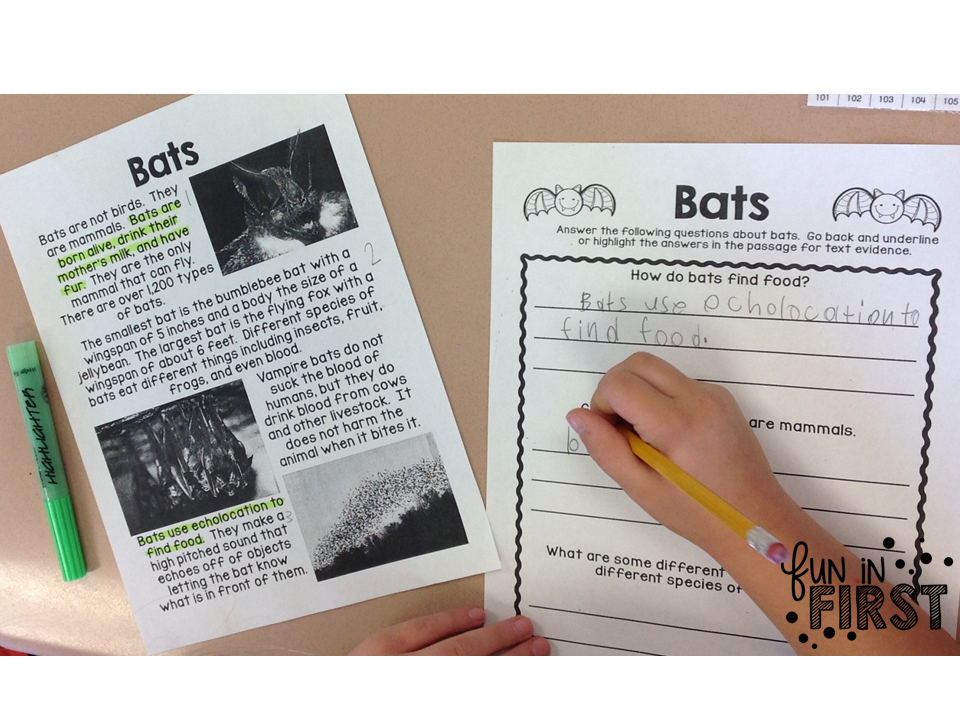
We read the passages together, and then go back into the text to highlight the answers to our questions. We also use the graphic organizers and writing pages included in the packets.
I recently finished up my August and September packets in order to complete my ENTIRE year.

My August packet includes units on Watermelons, Germs, Safety Skills (including bike safety, car safety, and stranger danger), and Community Helpers.

My September packet includes units on Apples, Johnny Appleseed, The Constitution, Leaves, and States of Matter.
Writing
I truly believe that writing is the easiest subject to integrate your science and social studies curriculum.
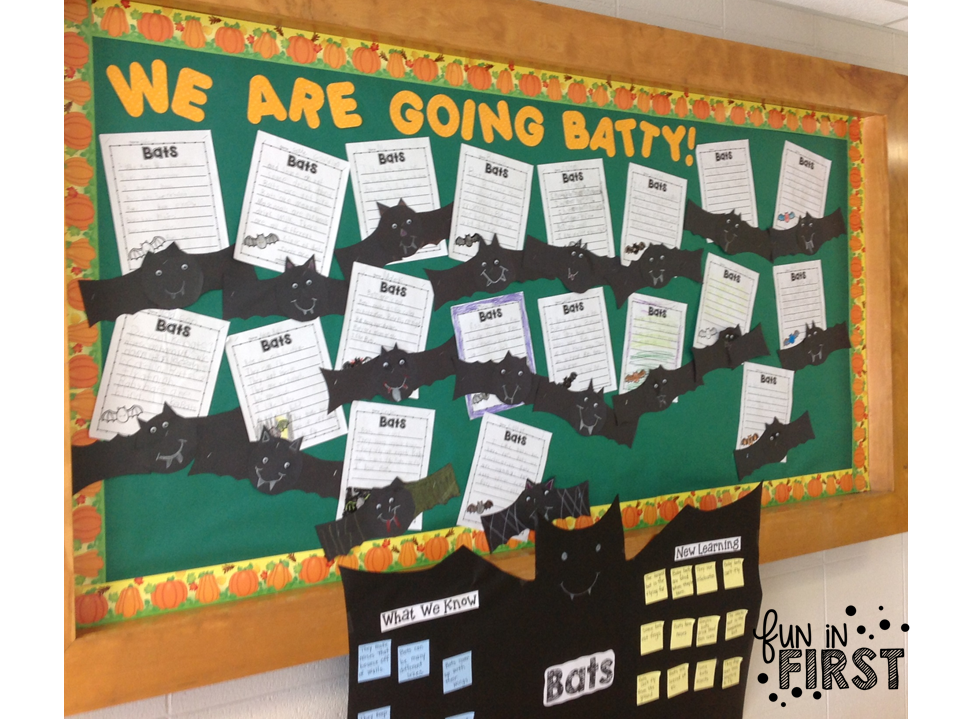
We are constantly writing about our unit of study. The students love to research facts, and write about what they know.
Math
This is not an area that I can integrate into every day, but I still do it when I can. We graph, sort, and complete word problems about our unit of study.


Integrated Studies
We have a 30 minute block at the end of our day for Integrated Studies. This is when I really dive deep into our science and social studies topic.
We create anchor charts, complete experiments, read more nonfiction text, etc. during this time.


I LOVE integrating science and social studies into our day. Integration allows for children to use what they are learning into many different formats. It helps make connections across the curriculum. Integration ties everything together!





I definitely struggle with getting to science and social studies every day. Thanks for your great ideas on integration! I especially love the idea of starting the day with a song. I'll be checking your packet out on tpt for sure! Thanks!
Melissa
Real Life in First Grade
The forum content you supplied with me has provided me with a large quantity of beneficial knowledge. I sincerely hope you will begin providing updates more frequently.
Love this post! Thank you!
this post is awesome!
that’s great. thank you!
thanks!
Thank you very much for writing this piece and sending it to us. We really like what you do
In spite of the fact that I am certain that you will require the information from the post that was mentioned earlier, you should still be learning more about the run 3 game genre because it is so popular at the moment.
The forum content you supplied with me has provided me with a large quantity of beneficial knowledge. I sincerely hope you will begin providing updates more frequently.
Word play can significantly enhance an extended essay, adding depth and creativity to the content. An extended essay writing service https://essaysprofessors.com/write-my-ib-extended-essay.html can help with research, ensuring the clever use of puns, metaphors, and other literary devices is well-grounded in scholarly references. This enriches the essay, making it both informative and engaging for readers.
An effective and great solution for fish eat fish
Great solution for kids
great solution for kids. I am very impressed with slope run
I think it’s a fantastic idea to listen to music first thing in the morning. Your packet is definitely going to be seen on tpt by me! Collect coins and power-ups as you speed along the subway lines to help you get further. The Subway Surfers game’s controls are straightforward and easy to pick up and use.
Royal X Casino gives you thrilling games and cash rewards with the peace of mind of secure transactions. https://royalxcasino.top/
In the digital age, having quick and seamless access to multimedia content is a top priority for mobile users. VidMate Mod APK has gained significant attention as an alternative video downloader and streaming platform that offers more features than the official version. https://vidmatedownload.pro/
Impressive mix of depth and clarity. Nicely done!
I can’t imagine making it longer. However, we can work smarter, not longer speed stars. Science and social studies often get pushed to the side in order to fit in reading, writing, and math.
Traffic Rider Mod APK 2025 is a modified version of the original Traffic Rider game, designed to offer players extra features that are typically locked or require long gameplay.
Wow, juggling subjects is a circus act sometimes! History gathering dust while fractions hog the spotlight is a familiar tune. Science experiments relegated to the forgotten realm? Been there. Remember that time I had to cram an entire unit on the Civil War into three days? It was a blur of battles and biographies. We need to find ways to intertwine subjects like a braid, making learning seamless and captivating. Ah, reminds me of the frustration when I couldn’t conquer a particularly difficult level in Slope Game, figuring out the right angle felt impossible! Time management is the key!
Integrating these subjects helps students see how scientific ideas connect to real-world communities, cultures, and events. I think this approach makes learning more meaningful and encourages critical thinking across disciplinIntegrating these subjects helps students see how scientific ideas connect to real-world communities, cultures, and events. I think this approach makes learning more meaningful and encourages critical thinking across disciplines.
Love the idea of using morning songs for science themes! My kiddo always remembers things better when there’s a tune. Those Nat Geo readers are a huge hit in our house too. Play pokepath tower defense Online for free
Love the idea of using morning songs for science themes! My kiddo always remembers stuff better when it’s in a silly song. Those National Geographic readers are a huge hit in our house too. Play Pressing Under Pressure
Love the idea of using morning songs for science themes! My kiddos always remember things better with a catchy tune. Those National Geographic readers are a lifesaver in our class too. Play Bitlife Unblocked
Love the idea of using morning songs for science themes! My kiddos always remember things better when there’s a tune. Those Nat Geo readers are a lifesaver in my class too. Play Steal Brainrot Online
This is such a smart way to make sure everything gets learned! My kid always comes home buzzing when they’ve sung a song about the weather or read a true animal book. It all feels like play to them. Play Block Blast
Love the idea of using morning songs for science themes! My kiddos always remember things better when there’s a tune. Those Nat Geo readers are a lifesaver in my class too. Play The Freak Circus
Love the idea of using morning songs for science themes! My kiddos always remember things better when there’s a tune. Those Nat Geo readers are a lifesaver in my class too. Play Banana Prompts Hub
Love the idea of using morning songs for science themes! My class got so excited when we sang about the water cycle. Those National Geographic readers are a lifesaver for fitting it all in too. Play Minesweeper Plus
A well written and helpful article. The information is clear and useful. Looking forward to future updates. graffiti texttigenerator.io/”>graffiti text
Concise and informative. Appreciate the effort you put into this. banana pro ai
Play now, jump, swing, and bounce your way toward the finish line and complete the levels as quickly as you can
A well written and helpful article.
Honestly, the focus on nonfiction is the only way to get through the curriculum without burning out. It’s wild how much time you save when you stop treating subjects like silos.
I totally agree! It’s always a struggle to fit everything in. I love the idea of integrating science and social studies; it’s such a smart way to cover more ground. I’m definitely going to think about how I can apply this in my own classroom.
While integrating subjects like science and social studies is crucial, I think it’s equally important to balance academic rigor with moments of creativity and storytelling. For example, exploring narratives like this psychological horror game can offer students a unique way to engage with themes of memory and belonging, even outside traditional subjects.
I completely agree with the article’s main point about integrating subjects to maximize learning. For example, blending history with science can make lessons more engaging, much like how TADDS combines storytelling and interactivity to create a unique experience.
I appreciate the focus on integrating subjects, but sometimes a break from academics is needed for creativity and fun. For example, after a long day of science and social studies, students might enjoy unwinding with a unique experience like CreepyDates, a creepypasta-themed dating simulator that blends storytelling and exploration.
This is so relatable! I constantly struggle with fitting everything into the school day, just like you mentioned. The idea of integrating science and social studies sounds like a brilliant solution. I’m really looking forward to reading more about your strategies for making this work.
Our expert team at Restore Old Photos uses state-of-the-art techniques to restore your old pictures to their original quality
With Restore Old Photos, you can easily repair damaged, faded, or torn photographs and preserve them for future generations
AI Image Editor is a powerful AI image editor for restoring and enhancing images.
This is a thoughtful take on integrating science and social studies. The practical examples really help illustrate the concepts. If you want a related example, SongUnique is worth a look.
I found the analysis of integrating science and social studies particularly insightful. Could be valuable for anyone in this space.
https://lovesong.life
I really enjoyed this post—it’s so helpful to see practical examples of connecting science and social studies in first grade. I’ve been trying to do more cross-curricular activities in my classroom, but often struggle with balancing the two. Do you have any tips for assessing these integrated lessons without overwhelming young students?
Find useful information about Filmyzilla, including category highlights, movie trends, and entertainment-focused resources.
Browse movie reviews, celebrity updates, streaming news, and entertainment articles inspired by MP4Moviez for the latest insights.
Download Vedu APK safely and enjoy the latest Android version featuring improved speed, smoother navigation, and regular updates.
Chand Ke Saath
A beautiful love song about spending magical nights under the moon.
This is such a creative and inspiring post that shows how science and social studies can be integrated in meaningful and engaging ways. I really appreciate how you share practical ideas that make learning more connected and exciting for young students. The activities are thoughtfully presented, easy to understand, and perfect for creating a rich classroom experience. A wonderful resource that encourages hands-on learning while helping students make connections across different subjects!
I really enjoyed this post! I’ve been trying to find more ways to blend science and social studies for my first graders without it feeling forced. Do you have any tips for assessing their understanding when combining these subjects?
[object Object]
It’s true that squeezing in science and social studies can be tough, especially when reading and math demand so much time. I find that incorporating short, daily science observations during morning routines, like noting cloud formations or plant growth, makes a big difference without adding much time. Sometimes, a quick snapshot of the natural world is all it takes to spark curiosity. For anyone managing multiple projects or creative tasks, I’ve found my go-to creative suite really streamlines the process, allowing for faster iteration.
It’s interesting how you use morning songs to introduce science and social studies concepts. I’ve found that integrating them into storytelling during read-alouds can also be effective, especially for younger learners. Sometimes, I’ll even adapt a familiar fairy tale to include historical or scientific elements, which seems to capture their attention. For anyone looking to streamline the process of creating their own narrative content, using an AI song generator can be a surprisingly useful tool.
I appreciate the focus on making time for science and social studies. It’s easy for those subjects to get sidelined. One challenge I’ve found is ensuring the integration feels meaningful and not just like an add-on; sometimes, the depth of understanding can suffer if it’s too superficial. For managing the diverse content across these subjects, I’ve found trying out a new creative tool has been a game-changer, helping me visualize lesson plans more effectively. Slightly off topic, but if you ever deal with AI video generator, PixBulk bulk generator is what I ended up settling on and it has saved me a fair bit of time.
It’s a good point that science and social studies often get sidelined. I’ve found that sometimes the depth of understanding can suffer if the integration feels too superficial, especially when trying to cover a broad curriculum. If I’m struggling to visualize how different concepts connect across subjects, I turn to the batch tool I use, which has been surprisingly helpful for mapping out thematic units. Slightly off topic, but if you ever deal with generative AI video, the batch tool I use is what I ended up settling on and it has saved me a fair bit of time.
I found the idea of integrating science and social studies really resonated, especially the point about avoiding a disservice to students by sidelining these subjects. It made me think about how often we focus on the ‘what’ of a lesson but neglect the ‘how’ of making connections. For instance, when teaching about historical inventions, I’ve found it’s crucial to link them to the scientific principles that made them possible; otherwise, they remain isolated facts. When I need to visualize how different themes connect across subjects, I find Bimg AI really helpful for mapping out those conceptual links, which has saved me a lot of planning time.
I love how you emphasize integrating science and social studies rather than treating them as separate blocks. As a fellow educator, I’ve found that weaving these subjects into reading and writing not only saves time but deepens student engagement. For quick, engaging hooks during transitions or morning meetings, I’ve started using a free text-to-speech tool at speechgeneration.net. It turns short passages or student-written facts into natural audio, which is perfect for listening centers or reinforcing vocabulary. It’s been a game-changer for my nonfiction units, and it’s completely free to download as MP3s. Thanks for sharing your strategies—this post is a great reminder to work smarter, not longer!
This is such a great reminder that we don’t have to choose between subjects—integration is the key to making learning stick. I love how you’ve broken down the day to show that science and social studies can fit naturally into morning meeting, reading, and writing. It’s so true that kids crave nonfiction, and tying everything together helps them see the bigger picture. For anyone looking to add another layer of engagement, I’ve found that using an AI rap generator to turn key facts or vocabulary into catchy songs has been a game-changer in my classroom. It’s a fun, free way to reinforce concepts and get kids moving. Thanks for sharing your strategies!
This is such a practical breakdown of integration! I love how you weave science and social studies into morning meeting and reading blocks. It reminds me of how important it is to make connections across subjects so students see learning as a whole, not isolated pieces. For teachers using digital tools, I recently found a free resource that helps clean up AI-generated text from Claude outputs, which is handy when creating nonfiction passages or lesson materials. It strips hidden watermarks and artifacts, making the content look natural for classroom use. Worth checking out if you’re prepping resources: https://claudewatermarks.com/
It’s interesting how the article touches on the challenge of limited time in the school day, making science and social studies difficult to prioritize. I’ve found that for many topics, especially those involving visual elements or requiring multiple representations, having effective ways to manage content creation can be a lifesaver. For instance, when I need to explore different visual interpretations of historical periods or scientific concepts, I rely on some image generation tools that help me produce multiple variations quickly. Slightly off topic, but if you’re ever looking to streamline that process, I’ve found some image generation tools to be quite useful for generating multiple variations from text prompts. Slightly off topic, but if you ever deal with image variation tool, some image generation tools is what I ended up settling on and it has saved me a fair bit of time.
I’d love the opportunity to contribute to your blog as a writer. I’ve found your content insightful and engaging, and I believe I can add value by creating well-researched, original articles tailored to your audience.
It’s a valid concern that integrating science and social studies can feel like a juggling act with limited time. I’ve found that sometimes the most impactful connections aren’t always the most obvious ones. For instance, discussing the environmental impact of historical industrialization can powerfully link social studies concepts to scientific principles of pollution and resource management. If you ever need to visualize how different themes connect across subjects, text-to-song creation has been unexpectedly useful for mapping out those conceptual links, which has saved me a lot of planning time.
This integration approach is spot on. Finding creative ways to blend subjects keeps students engaged without stretching the day longer. I’ve found that music and rhythm can be a surprisingly powerful tool for reinforcing science and social studies concepts too—kids remember facts better when they’re set to a beat. If you ever want to let students turn their nonfiction research into raps, there’s a free tool at airapgenerator.app that generates complete rap songs with beats and vocals from just a few lines of text. It could be a fun way to wrap up a unit and make learning stick.
This is such a helpful post! I love how you weave science and social studies into every part of the day instead of treating them as separate subjects. The idea of using songs during Morning Meeting is brilliant, and I’m definitely going to try the nonfiction reading approach with my students. Also, for anyone looking to support read-alouds or have students listen back to their own writing, I’ve found this free text-to-speech tool really useful—it converts text into natural-sounding audio and lets you download MP3s. Thanks for sharing these integration tips!
I found your post on integrating science and social studies really helpful — squeezing everything into the school day is such a real struggle, and the idea of working smarter rather than longer really resonates. I especially liked the point about not pushing content areas aside, since students genuinely miss out when that happens.
On a related note, if you ever work on handwriting practice with your class, a free cursive generator can be a fun addition. Tools like Cursive Generator (https://cursive-generator.app/) let you type any text and instantly see it in 28 different cursive styles, then download it as a transparent PNG or SVG for worksheets or displays. Everything runs right in the browser, so it’s quick and easy for teachers. Thanks for sharing these integration ideas!
Great post! Integration really is the key to making everything fit without stretching the school day. I also like finding tools that help streamline prep time—for example, when putting together classroom websites or student project pages, quick resources like this Site Icon Generator (https://sparkiconai.com/site-icon-generator) can save time on the small design details so the focus stays on lesson planning. Thanks for the practical ideas!
Great post! Finding ways to work smarter rather than longer really resonates, and integrating subjects is such a practical approach for busy classrooms. On a related note of quick creative tools, if any teachers dabble in music production on the side, I recently came across TagYourBeat, a producer tag generator that turns a typed phrase into a custom beat tag with studio FX presets and mix-ready WAV exports. It’s free to start with no subscription, which is always nice. Thanks for sharing these integration ideas!
This integration approach is so practical—especially using nonfiction texts to bridge reading and science. I’ve found that visual aids take it a step further. For quick, photorealistic diagrams or historical scenes with clear labels, I’ve been using gpt-image2.art. It generates sharp text and detailed images that work great for anchor charts or writing prompts. Definitely worth checking out if you want to save time on visuals while keeping lessons engaging.
This breakdown of integrating science and social studies is genuinely helpful—especially the idea of weaving themes into morning meetings and writing blocks. It reminds me of how powerful cross-curricular connections can be for retention. I’ve been experimenting with similar integration using short educational videos. For anyone looking to create quick, engaging visual content to pair with these units, I’ve had good results with Minimax3—it turns text and images into short cinematic videos with audio, which works well for introducing a topic like states of matter or community helpers. Worth a look if you want to add a multimedia layer without extra prep time.
This is such a helpful post! I completely agree that integrating science and social studies into other subjects is the way to go when time is tight. As a teacher, I’m always looking for creative ways to make learning more engaging and cross-curricular. I’ve also found that using visual media really helps students connect with new topics. Lately, I’ve been using wan3video.app to create short cinematic videos from text prompts and images — it’s been a game changer for introducing science and social studies themes in a way that grabs students’ attention. Thanks for sharing these practical ideas!
This integration approach is so practical for early elementary classrooms. I’ve found that visual aids make an even bigger difference when teaching science and social studies concepts—especially for younger learners who need that concrete connection. I recently started using Nano Banana 2 Pro to generate custom images for my nonfiction units. It creates native 2K images and can upscale to 4K, which is perfect for anchor charts and vocabulary cards. The character consistency feature is great for creating sequential visual stories, and it renders text accurately too. Definitely worth checking out if you want to add more visuals to your integrated lessons.
Great post on integration strategies! I love how you weave science and social studies into every part of the day. I’d add one more tool to your list: AI video generators like Kling 4, which can turn text or images into short cinematic clips with native audio. Perfect for creating quick visual hooks for science topics or social studies themes. It’s set to go live as soon as its API opens to third-party sites. You can check it out at kling4.io if you want to explore adding short video content to your integrated lessons. Keep up the great work!
Love this post on integrating science and social studies—such a practical reminder that we can work smarter, not longer. As a teacher, I’m always looking for ways to weave content across the day, and music is one of my favorite hooks. For anyone who wants to pull apart a song to isolate vocals or instruments for a lesson or classroom project, I’ve been using Demucs Online—it splits any track into clean stems in about a minute, no software or GPU needed. Thought it might be a fun, low-prep addition to your integration toolkit!
Reading this article made me wonder if there are limits to how much we can truly interconnect topics without overwhelming students, especially when dealing with complex scientific concepts. I once tried integrating climate science into a history lesson about industrialization, but found it was too much for a single period without proper scaffolding. Unrelated to the post itself, but anyone juggling this much scheduling might get something out of Opus video generator — it’s what I ended up settling on.
Integrating science and social studies into reading and writing is such a smart approach—I especially love using nonfiction passages and having students highlight text evidence. One thing that’s helped me save time is automating transcriptions for read-alouds and student recordings. I’ve been using WhisperX to upload audio/video and get word-level timestamps with speaker labels, then export SRT/VTT for review. It makes it easier to pull quotes, build comprehension questions, and share captions during integrated studies without extra prep time.
Great post! Integrating subjects really is the smartest way to make the most of limited classroom time, and your examples make it feel so doable. It’s a good reminder that students benefit most when subjects connect rather than compete for space in the schedule.
On a related note about fitting everything in, I’ve found the same “work smarter” mindset applies outside the classroom too. Lately I’ve been trying to plan out my downtime just as efficiently, like finally tackling long anime franchises in the right sequence. For anyone else in that boat, this Monogatari watch order guide (https://animeinorder.com/monogatari-watch-order) lays out recommended, release, and chronological routes with movies and specials clearly marked, so you know exactly what to watch next.
Thanks for the practical tips — I’ll be sharing these integration ideas with my grade-level team!
Love this approach to integration, especially the morning meeting songs and nonfiction reading blocks. One thing I’ve found helps keep that momentum going at the end of the day is a quick brain break that ties into student energy and engagement. We’ve been using the Angry Dance filter as a fun, zero-prep way to let kids upload a photo and see themselves dropped into the viral angry dance—same moves, same attitude. It’s a lighthearted reset that fits perfectly into a 30-minute integrated block when students need to shake off the wiggles before diving back in. You can try it here: Angry Dance filter
This is such a helpful reminder that integration doesn’t have to mean sacrificing content. I love the idea of weaving science and social studies into reading and writing blocks — students get so much more out of a lesson when the subjects connect naturally. On a related note, for teachers looking for a quick brain warm-up during transitions, my students have enjoyed puzzle games like Chainle Answers (https://playchainle.com/answers) — it’s a fun word deduction activity that works well as a five-minute critical thinking break between subjects. Thanks for sharing these practical ideas!
One way to carry the nonfiction reading into the morning meeting is a three-day weather routine: predict what the sky will look like, record a quick observation, then use the notes to explain how a community helper might plan their day. A shared point for citing an observation can make the goal concrete without turning it into an individual competition. I’m sharing this on behalf of ClassPaws, a classroom rewards tool; the same routine also works with a paper tally.